What Types of Insulation Are Ideal for Commercial Buildings?
Proper insulation plays an important role in the comfort, energy efficiency, and long-term performance of a commercial building. From offices and retail stores to warehouses and industrial facilities, commercial properties can have very different insulation requirements depending on their construction, size, climate, and intended use.
Choosing the right insulation can help reduce heat transfer, maintain more consistent indoor temperatures, and decrease the workload placed on heating and cooling equipment. Understanding some of the most common commercial insulation options can help property owners and facility managers determine which materials may be appropriate for their buildings.
Fiberglass Insulation
Fiberglass is one of the most widely used insulation materials for both residential and commercial construction. It is manufactured from fine glass fibers and is commonly available in batts, rolls, and loose-fill forms.
Fiberglass insulation may be installed in walls, ceilings, attics, and other accessible areas. Some of its advantages include:
- Cost-effective installation
- Reliable thermal performance
- Wide availability
- Compatibility with many building designs
- Resistance to moisture absorption when properly installed
Because fiberglass comes in several forms, professional installers can select an option that suits the configuration and insulation requirements of a particular commercial property.
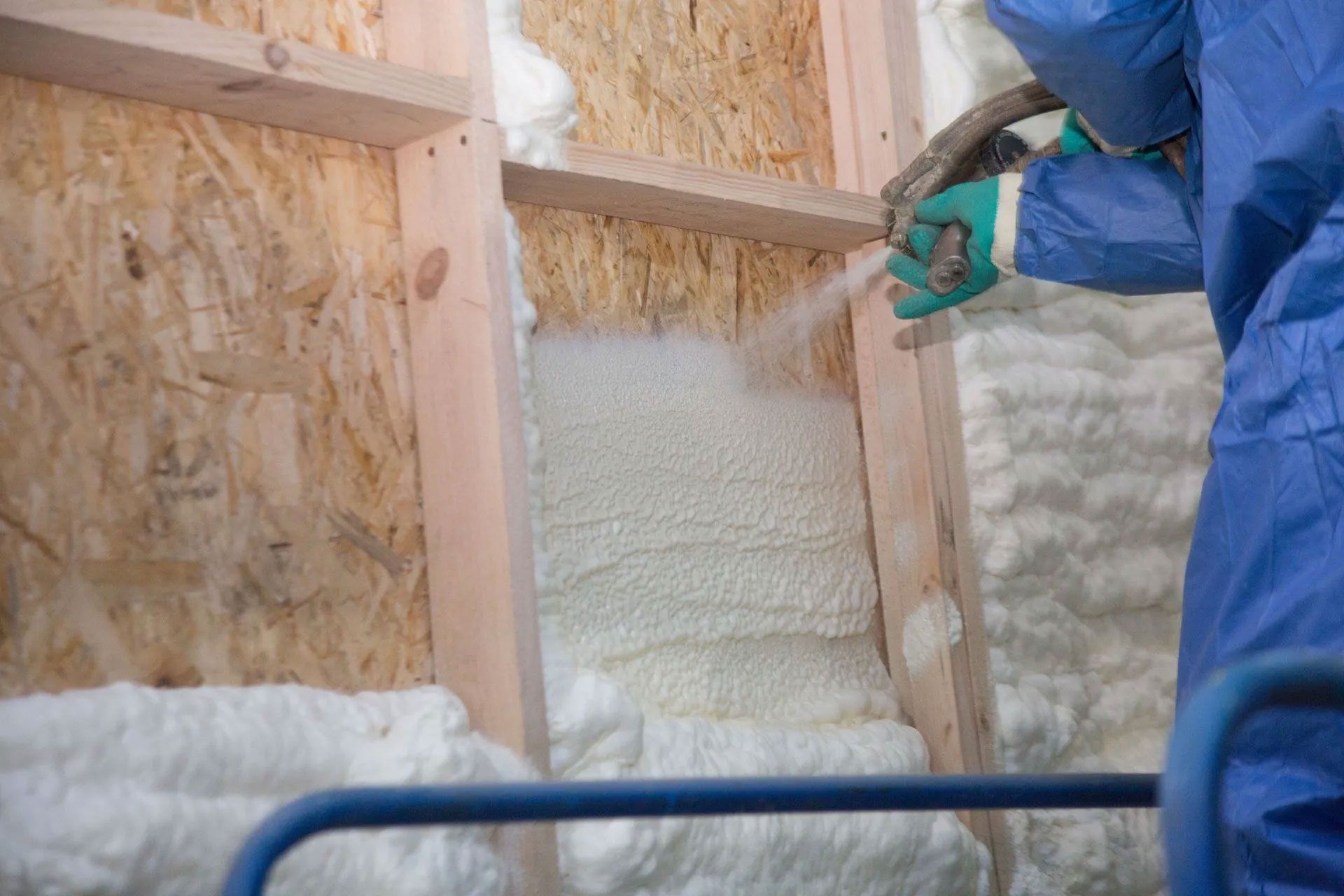
Spray Foam Insulation
Spray foam insulation is applied as a liquid that expands to fill cracks, gaps, and other difficult-to-reach spaces. Its ability to create a tight seal makes it a popular option when air leakage is a significant concern.
Commercial buildings may use either open-cell or closed-cell spray foam depending on the application. Closed-cell foam is denser and generally provides a higher R-value per inch, while open-cell foam is lighter and can be useful in certain interior applications.
Spray foam may be particularly beneficial for irregular spaces and areas where traditional insulation materials are difficult to install effectively.
Rigid Foam Board Insulation
Rigid foam board consists of durable insulation panels that can be installed in a variety of commercial applications. Depending on the product, these boards may be manufactured from materials such as expanded polystyrene, extruded polystyrene, or polyisocyanurate.
Rigid foam is commonly used for exterior walls, foundations, roofs, and other areas requiring continuous insulation. Its relatively high thermal resistance and durability make it well suited to many commercial construction projects.
How Do You Choose the Right Commercial Insulation?
There is no single insulation material that is ideal for every commercial property. The right solution depends on numerous factors, including the building's construction, local climate, moisture conditions, fire-safety requirements, budget, and desired energy performance.
Property owners should also consider the R-value of the insulation. R-value measures a material's resistance to conductive heat flow, with higher values generally indicating greater insulating effectiveness. Applicable building codes and energy-efficiency standards may establish specific insulation requirements based on the building and location.
Access Reliable Commercial Insulation Today
Commercial insulation installation requires careful planning to achieve reliable, long-lasting results. An experienced insulation contractor can inspect your property, identify areas where energy loss may be occurring, and recommend materials suited to your building's particular needs.
If you’re interested in adding insulation to your commercial surroundings, don’t hesitate to contact the team at Evans Services Group LLC today! Our technicians take pride in supporting all sorts of businesses across Orlando, FL and all the surrounding communities.